How We Create Tumbled Limestone Tiles from Derbyshire Stone
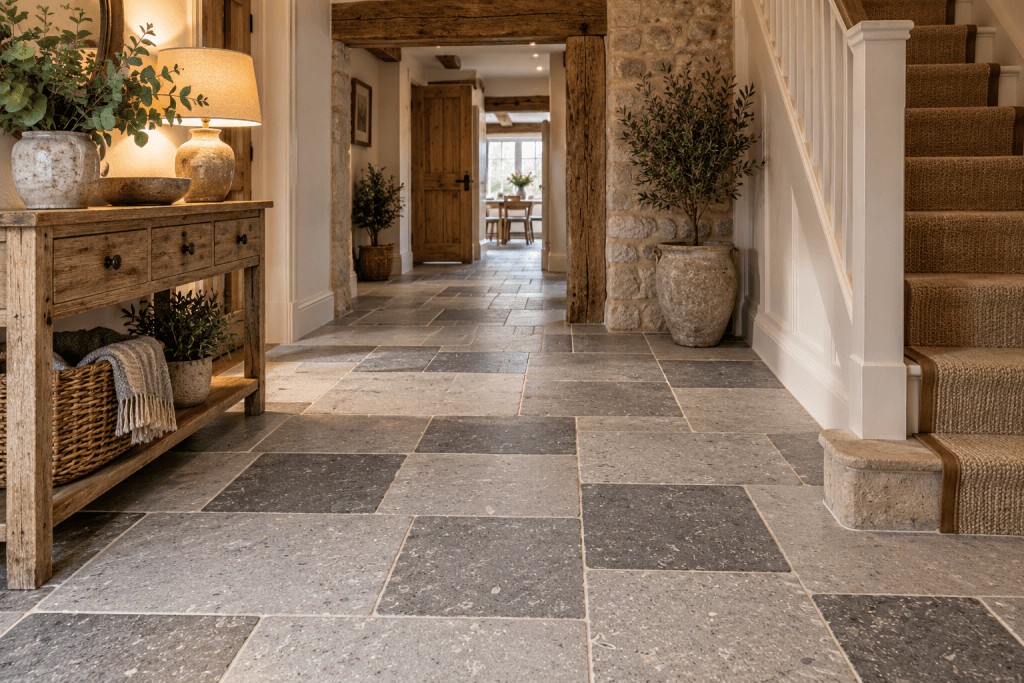
Tumbled limestone tiles have a wonderfully distinctive character. Their softened edges, gently textured surface and naturally aged appearance make them particularly suited to traditional homes, period properties and interiors where a pristine, perfectly uniform finish simply would not feel right.
But how does a piece of freshly cut Derbyshire limestone acquire the appearance of stone that could have been walked on for generations?
At Natural Stone Sales Ltd, we create tumbled tiles from our own Mandale Derbyshire Fossil Limestone. The stone begins its journey at our Derbyshire quarry before being cut and processed at our Rowsley premises, where specialist equipment is used to transform precisely cut limestone into tiles with a softer, more established appearance.
The tumbling process gently changes the edges and surface of the stone while retaining the fossils, tonal variation and natural characteristics that make Derbyshire Fossil Limestone so distinctive.
In this article, we take a closer look at how tumbled limestone tiles are made, what happens to the stone during the process and why this traditional-looking finish remains such a popular choice for homes and character properties.
What Is a Tumbled Limestone Tile?
A tumbled limestone tile is a natural stone tile that has been deliberately processed to soften its edges and create a more aged, characterful appearance.
Freshly cut limestone has relatively crisp edges and a more precise appearance. Tumbling changes this by gently distressing the stone, rounding some of those sharper edges and introducing subtle variation to the surface.
The aim is not to make every tile look identical. Quite the opposite. A successful tumbled finish enhances the natural individuality of the limestone and creates the impression of a floor that has developed character gradually over many years.
This makes tumbled limestone particularly appealing in period properties, cottages, barn conversions and traditional kitchens, although it can also provide an interesting contrast within a more contemporary interior.
From Derbyshire Quarry to Limestone Tile
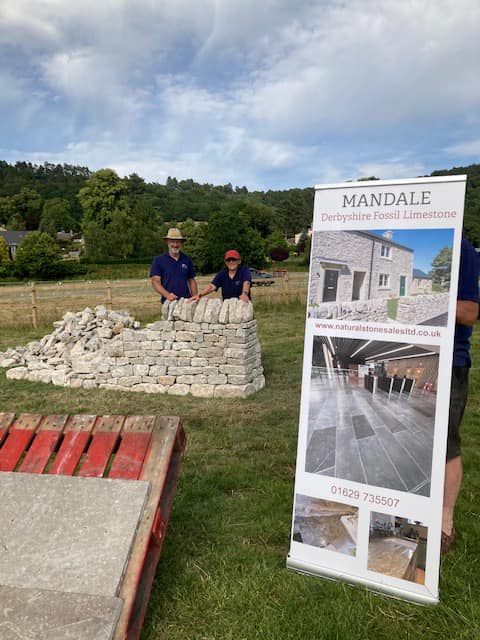
Our tumbled tiles begin with Mandale Derbyshire Fossil Limestone extracted from our own Derbyshire quarry.
Once the stone has been selected, it can be cut into slabs and processed to the dimensions required for the finished tiles. At this stage, the limestone still has the relatively clean edges associated with newly cut stone.
Producing a good tumbled tile begins long before it reaches the tumbling machine. The stone needs to be carefully selected and cut to allow for the changes that take place during processing.
Our experience working with Derbyshire limestone throughout the process — from quarrying and cutting through to finishing — allows us to understand how the material is likely to behave and select stone appropriate for the intended application.
How We Tumble Derbyshire Limestone Tiles
The distinctive appearance of a tumbled limestone tile is created using specialist tumbling equipment.
The tiles are placed into the tumbler, where controlled movement gently works the stone. This gradually softens the freshly cut edges and changes the surface texture, removing some of the precision associated with a newly manufactured tile.
It sounds simple, but achieving the right result requires judgement.
Too little processing and the tile can retain an overly crisp appearance. Too much can remove more material than intended or create an unnecessarily distressed finish. The objective is to produce a naturally aged appearance while retaining the strength, fossil detail and individual character of the limestone.
When we originally developed our larger tumbled limestone tiles, part of the challenge was finding the right combination of tile dimensions and stone thickness to work successfully with our tumbling equipment.
Through testing and experimentation, we were able to produce tiles up to approximately 450mm wide using 30mm limestone, allowing the traditional tumbled appearance to be achieved in a more substantial tile format.
It is a good example of how traditional natural stone and modern stone-processing equipment can work together to create something with an appearance that feels anything but mass-produced.
What Does Tumbling Do to the Fossil Detail?
One of the attractions of using Mandale Derbyshire Fossil Limestone is that the character is already present within the stone.
Tumbling does not add an artificial pattern. Instead, it changes the way the existing limestone is presented.
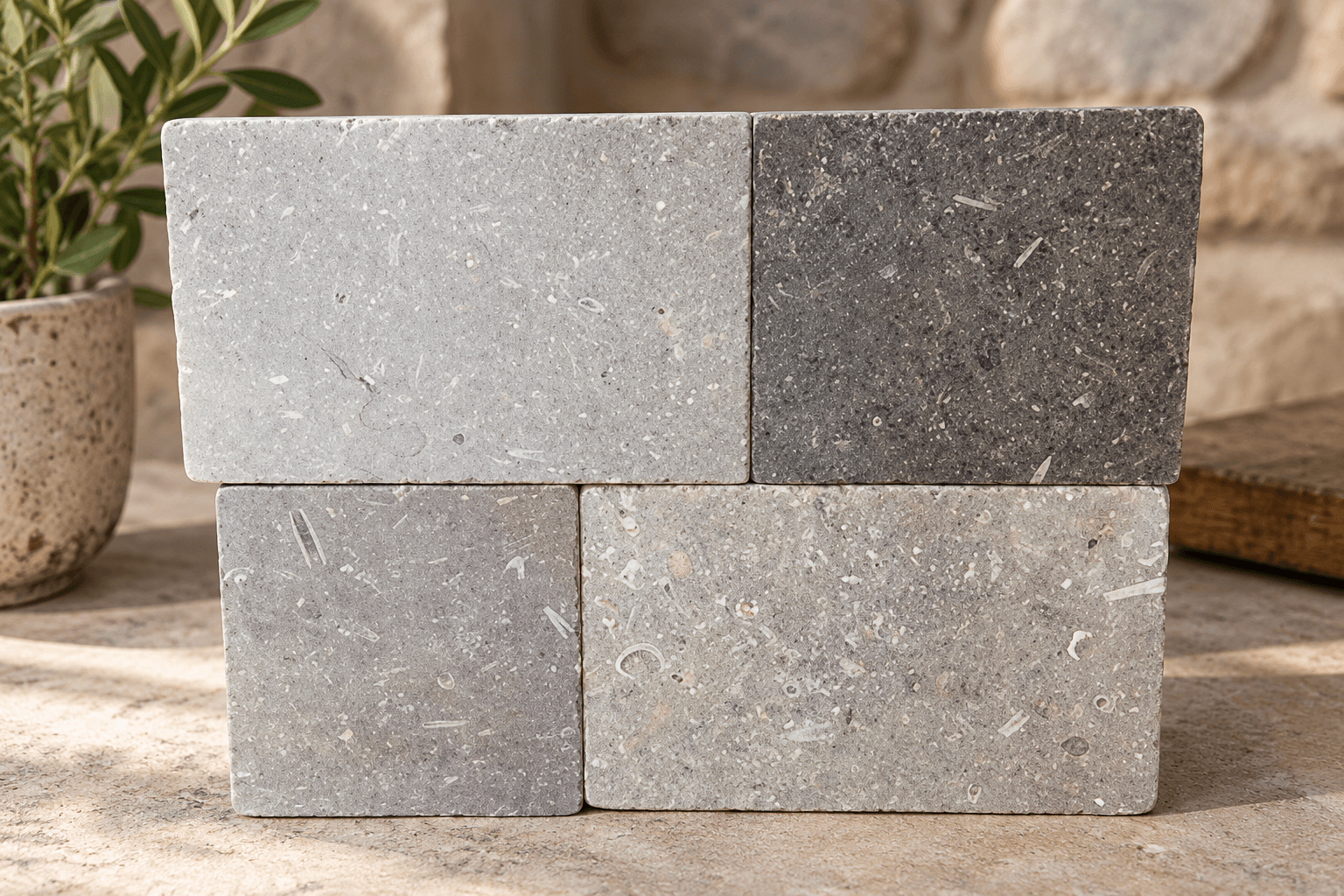
The softened edges and more tactile surface complement the natural fossil fragments, tonal variation and markings within the stone. Each tile therefore retains its own individual appearance, with differences becoming part of the overall character of the finished floor.
When several tumbled tiles are laid together, those variations create a surface with depth and movement rather than a repeated or manufactured pattern.
Why Choose a Tumbled Finish?
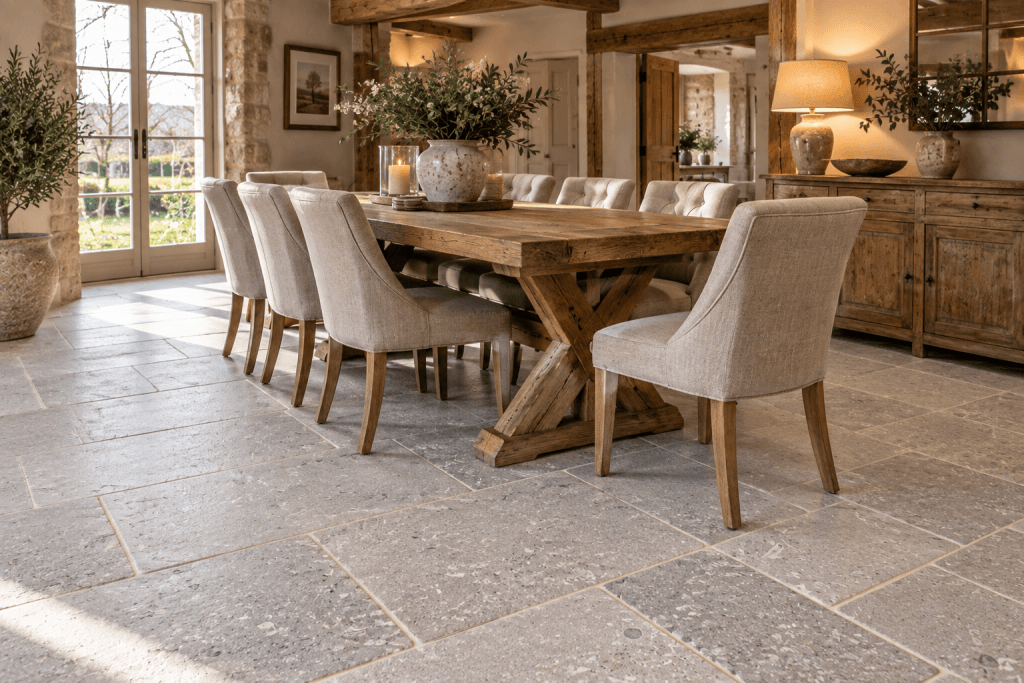
The main reason for choosing tumbled limestone is character.
A newly installed tumbled floor can immediately feel more established than one created using tiles with perfectly straight edges and a highly uniform surface. This can be particularly important when introducing new flooring into an older building where something too precise could look out of place.
Tumbled Derbyshire limestone can work particularly well in:
- Period properties
- Traditional kitchens
- Farmhouses and cottages
- Barn conversions
- Entrance halls and boot rooms
- Renovation and restoration projects
- Country-style interiors
- Selected outdoor and transitional areas
That does not mean tumbled limestone is restricted to traditional properties. Used alongside contemporary cabinetry, glass, steel or modern furniture, the aged texture of natural stone can provide an effective contrast to cleaner architectural lines.
Ultimately, the choice between tumbled and smoother finishes comes down to the appearance, texture and practical requirements of the individual project.
Tumbled or Honed Limestone?
Tumbled and honed limestone can begin as exactly the same natural stone but result in very different finished surfaces.
A honed finish generally creates a smoother, cleaner and more contemporary appearance. Tumbling deliberately introduces softer edges and a more aged character.
Neither is inherently better than the other. The right choice depends on the property, intended use and overall look you are trying to achieve.
If you are deciding between the two, read our Honed vs Tumbled Limestone Tiles: What’s the Difference? guide for a more detailed comparison of the finishes.
Caring for Tumbled Limestone Tiles
Like other natural limestone surfaces, tumbled tiles should be correctly installed, sealed and maintained using products appropriate for natural stone.
The textured nature of the finish does not mean the floor should be difficult to live with, but natural limestone should be treated differently from ceramic or porcelain tiles. Harsh acidic cleaning products should be avoided because they can affect calcium-based stone.
Correct sealing helps protect the surface and makes ongoing maintenance easier, while routine cleaning with suitable natural-stone products will help preserve the appearance of the floor.
If you are unsure about installation, sealing or ongoing maintenance, our team can advise on the appropriate approach for your particular limestone and application.
A Derbyshire Stone with Genuine Character
There is something particularly appropriate about applying a traditional-looking tumbled finish to stone that has its own remarkable history.
Mandale Derbyshire Fossil Limestone was formed hundreds of millions of years ago, yet modern cutting and tumbling techniques allow us to transform it into flooring suitable for homes and buildings today.
The finished tiles combine two different kinds of character: the genuine fossils and variations created naturally within the stone, and the softened, established appearance produced through the tumbling process.
The result is a floor that feels individual from the moment it is installed and can continue to develop character as it becomes part of the property.
Discover Mandale Tumbled Limestone Tiles
At Natural Stone Sales Ltd, we quarry and process our own Mandale Derbyshire Fossil Limestone, giving us first-hand knowledge of the stone throughout its journey from quarry to finished tile.
Whether you are renovating a period property, creating a traditional country kitchen or simply prefer the character of a more naturally aged surface, we can help you decide whether a tumbled limestone finish is right for your project.
Explore our Mandale Limestone Tiles page to discover the available limestone flooring options and finishes.
See Tumbled Limestone for Yourself
Natural stone is always best appreciated in person. Photographs can show the overall colour and style, but seeing the surface, fossil detail and variation for yourself gives you a much better understanding of how the finished floor could look.
You are welcome to visit our Rowsley showroom to view Mandale Derbyshire Fossil Limestone and discuss your project with our experienced team.
Natural Stone Sales Ltd
Old Station Yard
Rowsley, Matlock
Derbyshire, DE4 2EJ
Tel: 01629 735 507
Email: enquiries@naturalstonesalesltd.co.uk
If you are making a special journey or would like to discuss a particular project in detail, contact us beforehand and we can make sure the appropriate member of our team is available
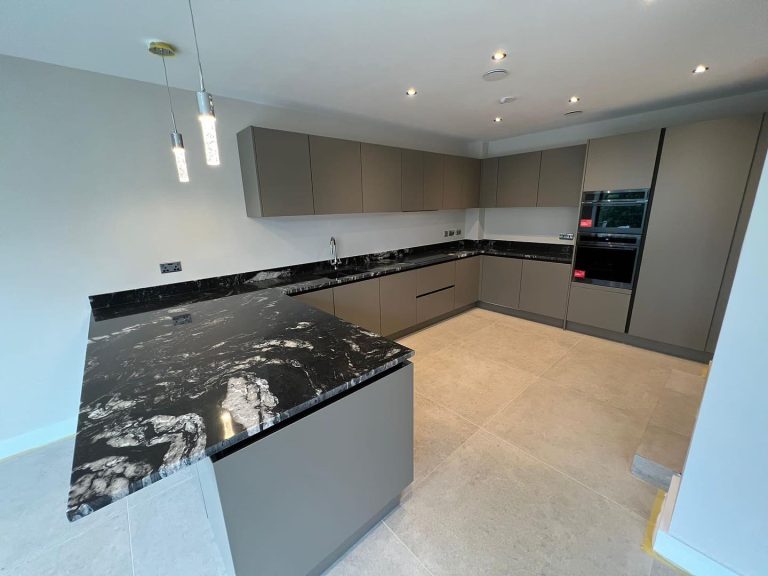
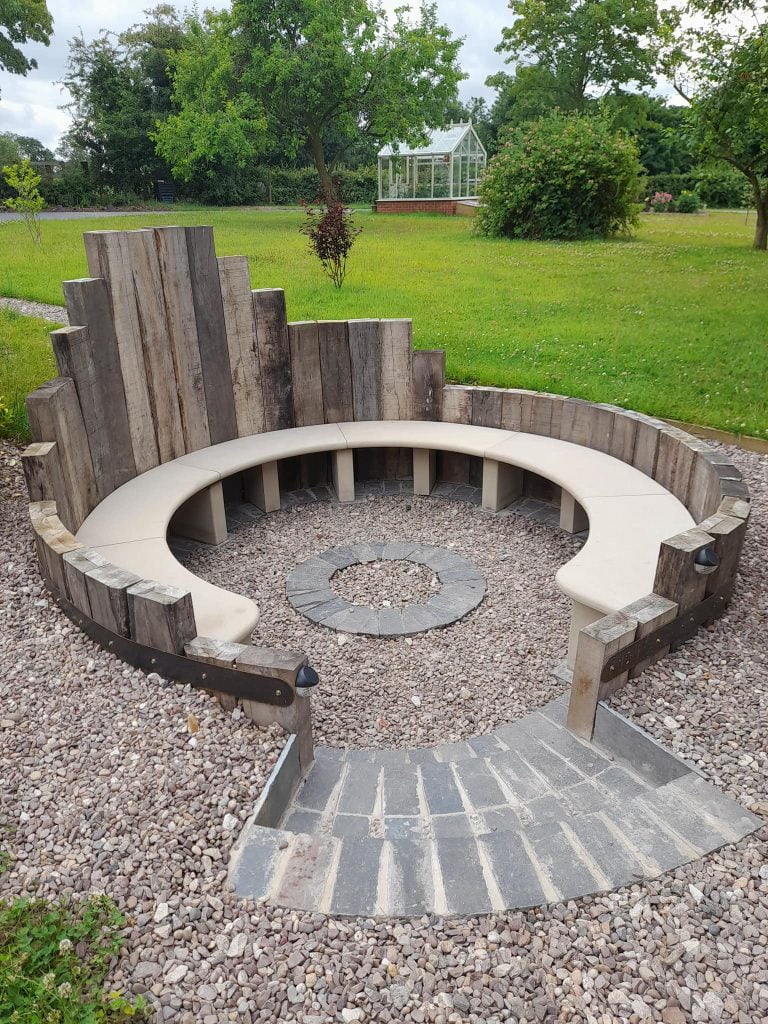
*The images above are AI created using samples of our tumbled tiles to give you an idea of how they can look in a home.