

Natural Stone in Sustainable Building: Why Sourcing and Longevity Matter
When choosing materials for a building or renovation, sustainability involves more than whether a product is described as natural. Where it comes from, how it is processed, how long it lasts and what happens when it is no longer needed all matter.
Natural stone can offer important benefits in each of these areas. Used appropriately, it can serve a building for generations and may be repaired or reused when requirements change.
At Natural Stone Sales, our connection with Derbyshire stone gives us a practical perspective on these choices. From limestone building materials from our own quarry to bespoke stone products, understanding the material and its journey helps customers make better-informed decisions.
What makes natural stone a sustainable building option?
Natural stone already exists in a form that can be quarried, cut and shaped into useful building products. Unlike materials that require firing or the manufacture of a cement binder, the stone itself does not need to be created through an industrial chemical process.
That can offer an advantage in terms of embodied carbon: the emissions associated with extracting, processing, transporting and installing a material.
However, natural stone is not impact-free. Quarrying affects land, machinery uses energy, and cutting and finishing require resources. Stone is also a finite geological resource, rather than something that renews within a human lifetime.
The useful question is therefore which stone is appropriate for the project and how responsibly it is sourced and used.
Our Derbyshire limestone and the Once a Week Quarry
Knowing where a building material comes from is an important part of making an informed choice.
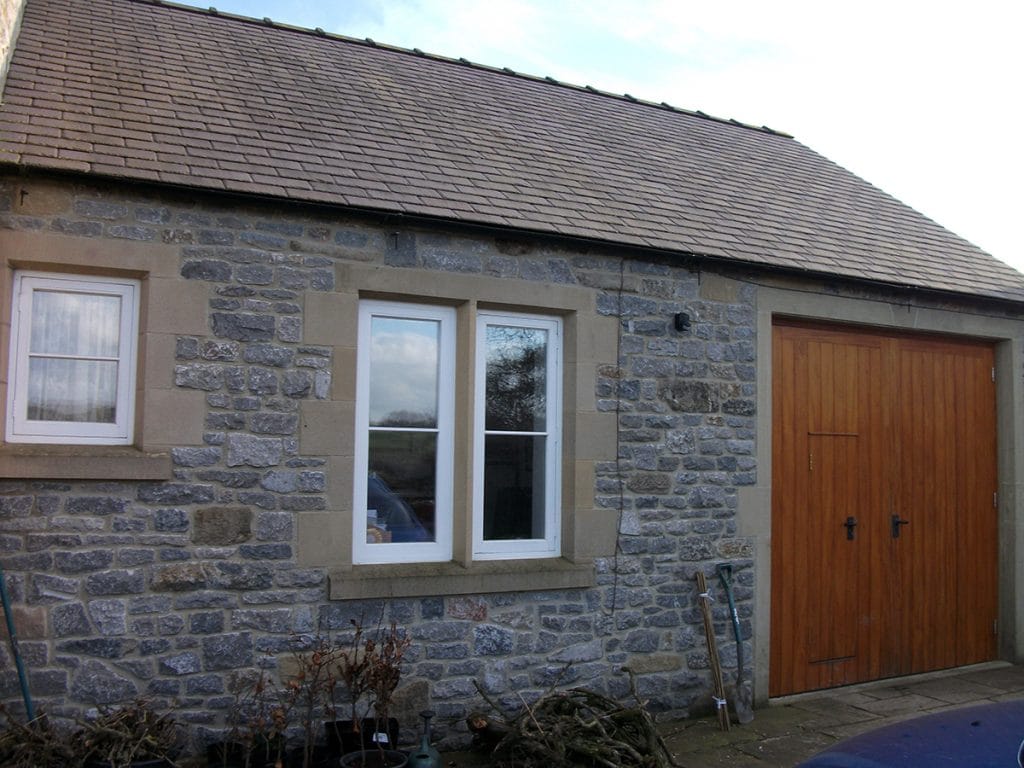
At Natural Stone Sales, our limestone building materials come from our own privately owned quarry at Sheldon, near Bakewell. Known locally as the Once a Week Quarry, it is operated by our sister company, Mandale Stone Company, and is the source of our Mandale Derbyshire Fossil Limestone.
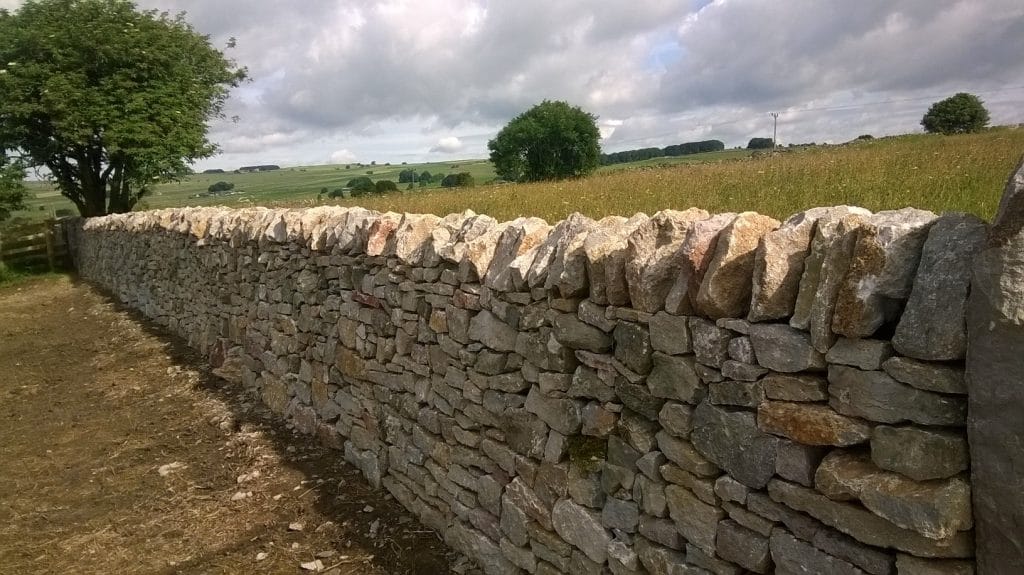
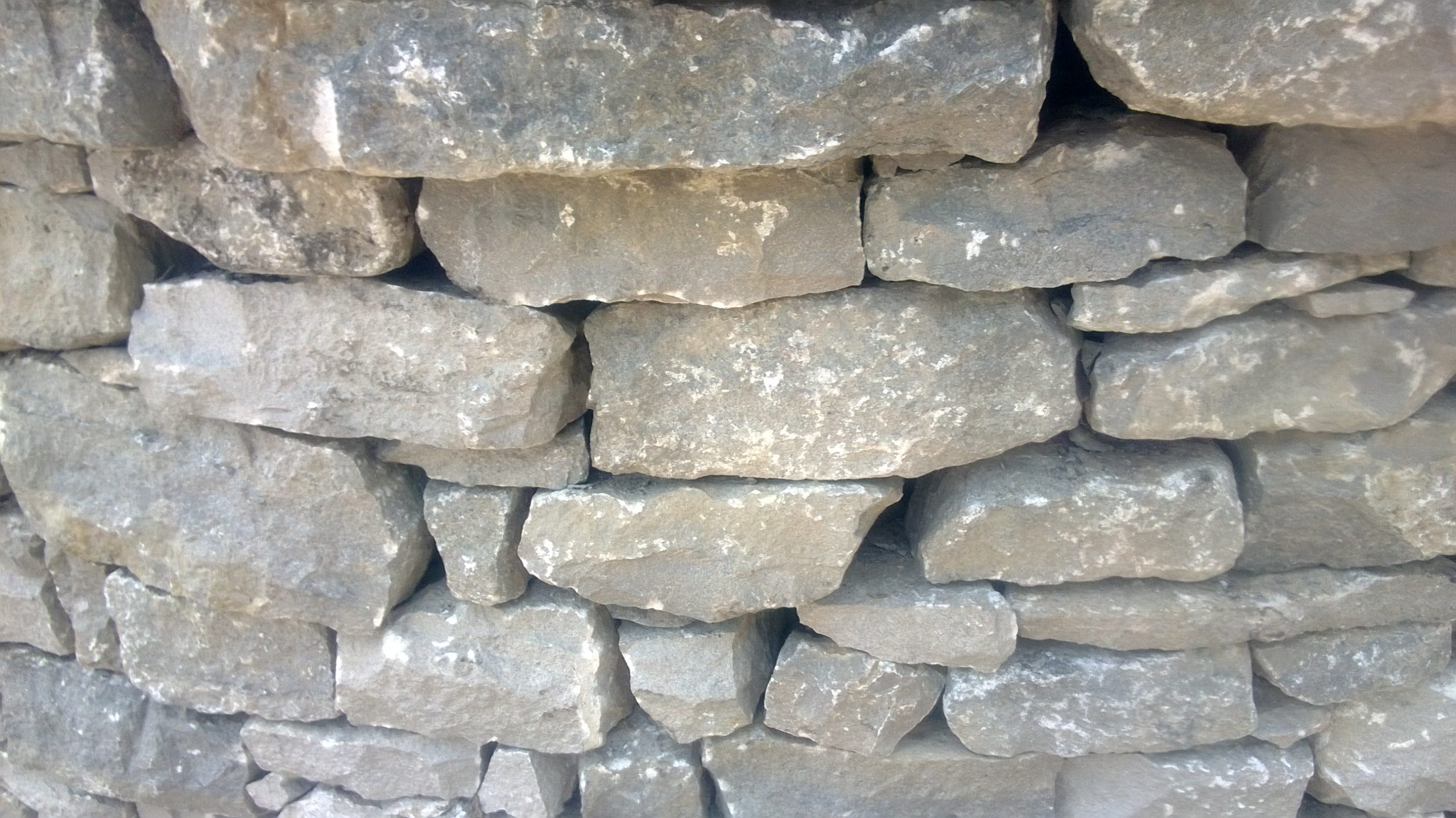
We supply limestone building stone in a roughly squared form for projects including new homes, extensions, renovations and restoration work. We also supply limestone for dry stone walling.
For projects in Derbyshire and the surrounding area, choosing stone from a nearby quarry can shorten the transport journey compared with stone sourced further afield. The overall environmental impact still depends on processing, delivery arrangements and the amount of material required, but knowing the source makes these questions easier to explore.

There is also a connection with the buildings around us. Our limestone is used throughout the Peak District, where its natural appearance helps new work sit comfortably alongside established stone buildings and boundary walls.
Choosing local stone can therefore support both practical construction needs and the architectural character of the area.
How does processing affect the environmental impact?
Different stone products require different amounts of work. Building stone, polished worktops and textured flooring do not follow identical production processes.
Cutting, shaping and finishing all use energy, while water is commonly used to cool equipment and control dust. How these resources are managed matters alongside the choice of stone.
In our published account of environmental practices, we describe how water used by the saws and machinery at Rowsley passes through settlement tanks before being filtered and pumped back into use. Recirculating process water reduces the need to draw fresh water continuously.
The same account explains how Mandale building stone and dry stone walling are loaded loose onto tipper lorries, avoiding bags and wrapping for those deliveries.
These are practical examples of where resource use can be reduced within stone production and supply. They also show why it is worth looking beyond the finished product and asking how it has been prepared.
Why is a long service life so important?
Every replacement material brings another round of extraction, manufacture, transport and installation. Choosing something that remains useful for many years can help reduce the need to repeat those processes.
Natural stone has a long history of use in buildings, walls, floors and architectural details. Its potential longevity is one of its strongest advantages, but the right specification is essential.

Stone needs to suit its intended use. An external step has different requirements from an internal wall tile, while exposed masonry faces different conditions from a kitchen worktop.
The finish, thickness, installation and maintenance all influence performance. Choosing appropriately at the beginning is more valuable than relying on a general claim that all stone will last indefinitely.
Appearance matters too. A material that complements the building and remains appealing as it ages is more likely to be retained.
Can natural stone be reused?
In many cases, yes. Sound building stone, paving and architectural pieces can potentially be recovered and used again, depending on their condition and how they were installed.
Reusing a piece of stone preserves more of its existing value than crushing it into aggregate. A recovered flagstone that can be relaid as flooring, for example, continues to perform much the same function without needing a newly quarried replacement.
Where direct reuse is not practical, some stone may be suitable for processing into aggregate or other applications. This depends on contamination, local facilities and the requirements of the next use.
It is therefore more useful to think about opportunities for recovery than to assume every stone product will automatically be recycled. Installation methods and careful dismantling can make a significant difference.
For an existing property, it is also worth asking whether stone already in place can be retained or repaired before ordering replacements.
Does stone make a building more energy efficient?
Stone can absorb and store heat, a property known as thermal mass. In a suitably designed building, this can help moderate changes in temperature.
However, thermal mass is not the same as insulation. A stone wall or floor does not automatically reduce heating bills, and stone should not be treated as a substitute for a properly insulated building.
Its effect depends on the wider design, including insulation, ventilation, sunlight and how heating is controlled.
For homeowners, the practical message is to consider stone as part of the complete building. Your architect or designer can advise how the chosen materials will work together.
How can you compare materials fairly?
Broad labels such as “green” or “eco-friendly” tell you relatively little on their own. A useful comparison looks at products that can perform the same job over a similar period.
For projects requiring a detailed environmental assessment, an Environmental Product Declaration, or EPD, can provide information about a product’s environmental impacts. Where relevant declarations are available, a designer can use them as part of a wider assessment rather than relying on general claims about a whole material category.
For smaller projects, straightforward questions still help. Where was the stone quarried and processed? Is it suitable for the intended setting? What maintenance will it need? Could it be repaired or reused?
Accurate measurements and sensible design also help avoid unnecessary waste. Ordering the right material in the right quantities is part of using resources carefully.
Choosing stone for your project
Whether you are planning an extension, restoring a property or choosing new flooring, a thoughtful material choice starts with understanding what the project needs.
At Natural Stone Sales, we supply limestone building stone and dry stone walling from the Once a Week Quarry, alongside Mandale limestone flooring, gritstone masonry and bespoke stone products. We can discuss the stone’s origin, available finishes and suitability for your intended application.

Limestone for Self-Builders, Architects and Contractors
Choosing building stone involves more than finding the right colour. It also means considering how the material will suit the design and relate to neighbouring properties.
For self-builders, limestone offers natural variation that gives a new home its own character. It can complement a traditional design or bring texture to a more contemporary property.
Architects can use limestone to connect a building with its surroundings. Stone sourced locally can help reflect the character of an area, particularly where existing homes share similar materials.
For contractors, knowing where the stone comes from provides a clear starting point when discussing project requirements. Natural Stone Sales Ltd supplies limestone building stone from its own Derbyshire quarry, allowing customers to discuss their plans directly with the supplier.

Why Choose Natural Stone Sales Ltd?
Natural Stone Sales Ltd supplies high-quality limestone building stone for projects throughout the UK. We work with homeowners, self-builders, architects, developers, and building contractors, providing durable natural stone sourced from our own Derbyshire quarry.
Whether you are planning a new build, extending an existing property, restoring a heritage building, or constructing traditional dry stone walling, our team can help you select the right stone for your project.
What sets us apart from many stone suppliers is our close connection to our own Derbyshire limestone quarry. This allows us to offer high-quality limestone with complete confidence in its origin, quality, and suitability for a wide range of commercial applications. By controlling the journey from quarry to finished product, we can provide a level of knowledge and expertise that is difficult to match.




Frequently Asked Questions About Limestone Building Stone
Is limestone building stone suitable for modern homes?
Yes. Limestone can suit contemporary homes as well as traditional properties. Its natural texture provides contrast alongside glass, steel and timber. The overall effect depends on the stone selected, its finish and the way it is laid.
How durable is limestone building stone?
Limestone has a long history of use in construction and can provide a lasting exterior when correctly specified and installed. However, performance varies between different limestones. The choice of stone, exposure to weather and construction details all matter when assessing its suitability for a project.
Can limestone be used for extensions and renovations?
Yes. Limestone can be used for extensions and renovation work, whether the aim is to complement an existing building or create a considered contrast.
When matching existing stonework, look beyond colour alone. Texture, stone sizes, laying pattern and mortar joints all influence the finished appearance. Comparing samples with the original building can help you assess the match before ordering.
Where does your limestone building stone come from?
Natural Stone Sales Ltd supplies limestone building stone from our own Derbyshire quarry. This gives customers a known source for their stone and a direct point of contact to discuss their requirements.
For projects seeking to reflect Derbyshire’s building traditions, locally quarried limestone can also help connect new work with the character of the surrounding area.
Get in Touch
Visit our showroom
Natural Stone Sales Ltd
Old Station Yard
Rowsley, Matlock
Derbyshire, DE4 2EJ
Tel: 01629 735 507
enquiries@naturalstonesalesltd.co.uk
Get Social


