Can you Replace Old Laminate Worktops with Stone without Replacing your Kitchen
Update the look of your kitchen
If your old worktops, or laminate worktops are looking tired, you may be wondering whether you can replace them with natural stone worktops without replacing the cupboards underneath.
In many kitchens, the answer is yes. Provided the existing units are in good condition and offer suitable support, new granite or limestone worktops can transform the room while keeping the layout you already enjoy. Manufactured surfaces such as Silestone and Dekton offer further options.
At Natural Stone Sales, we can help you explore the materials, understand their care requirements and choose a worktop that complements your existing kitchen.

Are my existing kitchen units suitable?
The condition of the cabinets matters more than their age. They need to be sound, secure, level and suitably supported for the proposed worktop.
Stone is heavy, so replacing laminate involves more than choosing a colour. The cabinet structure, joints, legs and supports need consideration, particularly around appliance gaps and any overhanging sections.
This does not automatically mean you need new cupboards. However, you should arrange for a carpenter or kitchen fitter to assess the existing units and carry out any repairs, levelling or reinforcement before templating.
Natural Stone Sales can discuss the requirements of your chosen worktop, but checking and preparing the cabinets should be undertaken by your carpenter or kitchen fitter. Water damage around the sink, loose units or uneven cabinets should be addressed before the project progresses.
Which worktop material would suit my kitchen?
The right material should work with your cupboards, flooring and lighting, as well as your cooking habits. A surface that looks beautiful in a photograph may feel quite different alongside your own cabinet doors.
Natural Stone Sales supplies granite, Mandale Derbyshire Fossil Limestone, Silestone and Dekton. Each offers a different combination of appearance, character and everyday care.
Granite: natural pattern and individual character
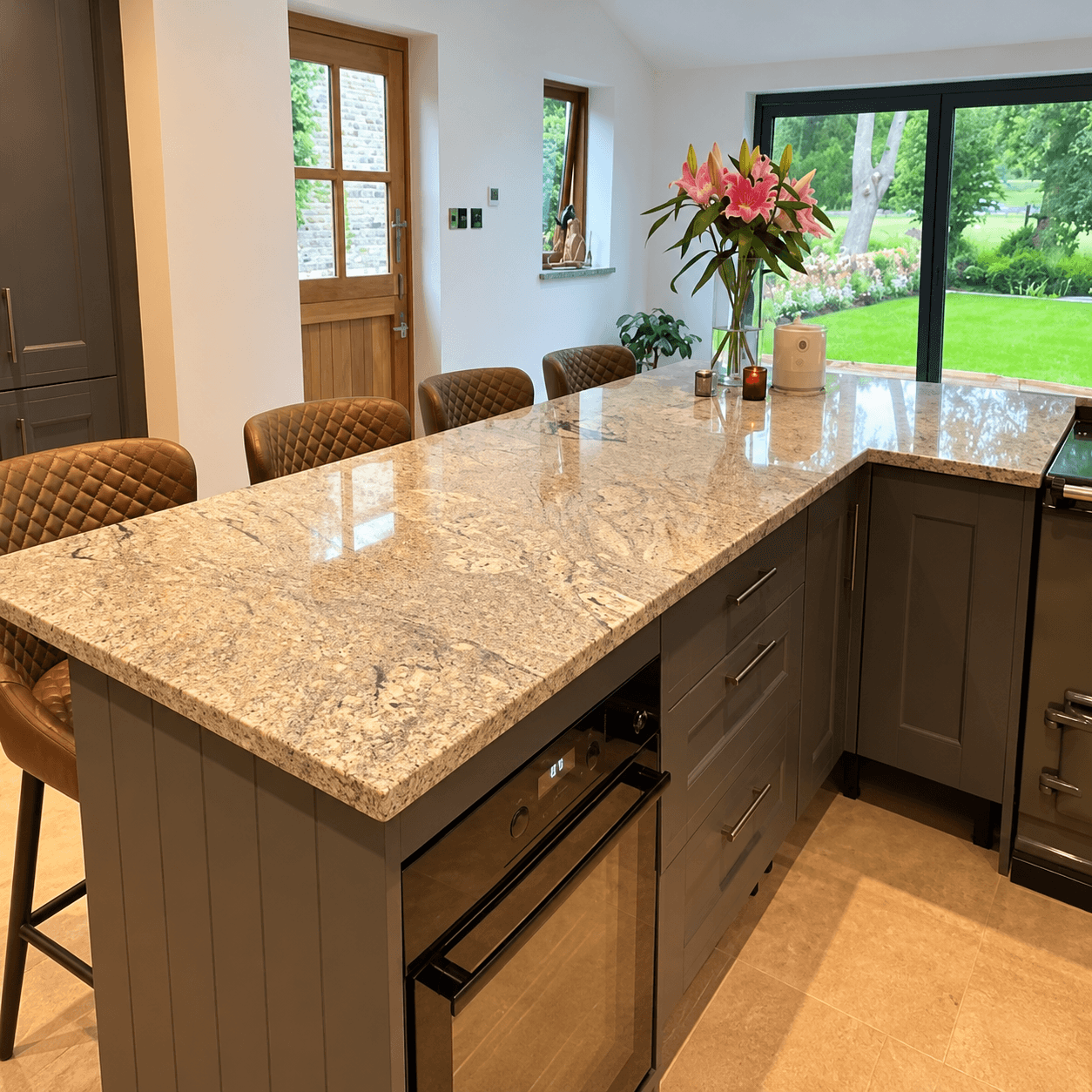
Granite is a good starting point if you want natural stone with its own distinctive appearance. Depending on the variety, it can offer subtle flecks, flowing patterns or more dramatic movement.
It can complement both traditional timber cupboards and contemporary painted kitchens. The important thing is choosing a pattern and colour that work with the features you are keeping.
Granite is durable, but care requirements vary between stones. We can discuss the selected material’s sealing and cleaning needs so you know what to expect before ordering. Chopping boards and trivets remain sensible everyday precautions.


Mandale limestone: a piece of Derbyshire in your kitchen
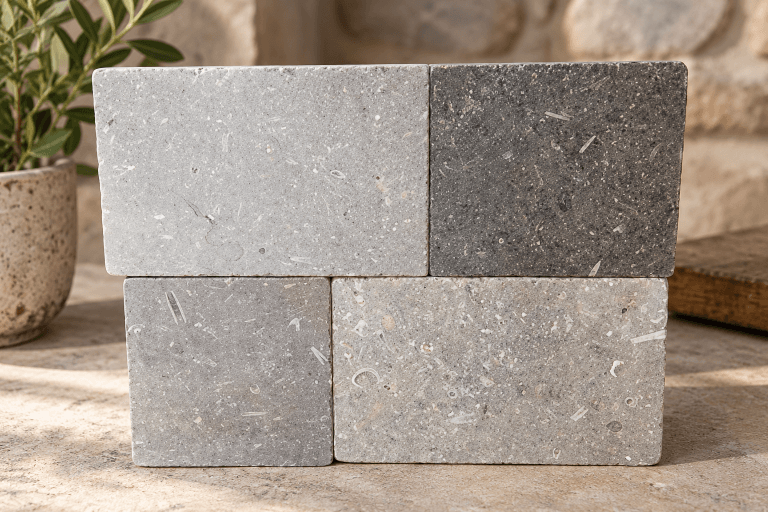
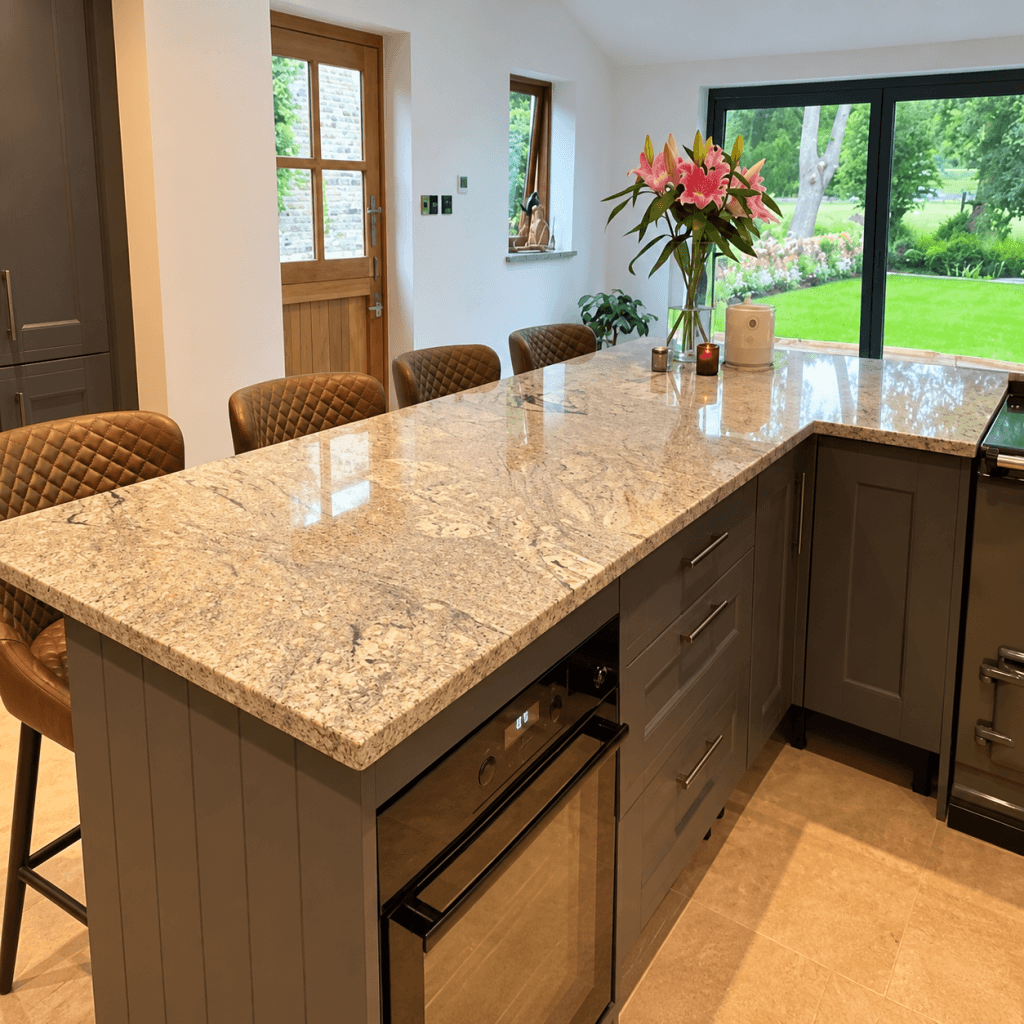
Mandale Derbyshire Fossil Limestone offers something particularly individual. Its fossil markings and natural variation give each worktop a character that cannot be repeated exactly.
It is an appealing choice if you value local stone and want the surface itself to be a feature of the room. Looking at larger pieces helps you appreciate how the fossil detail will appear across a worktop.
Limestone requires a thoughtful approach to care. Acidic spills such as lemon juice or vinegar can etch the surface, and sealing does not prevent this. We can explain the care involved and help you decide whether its natural character and developing patina suit your expectations.




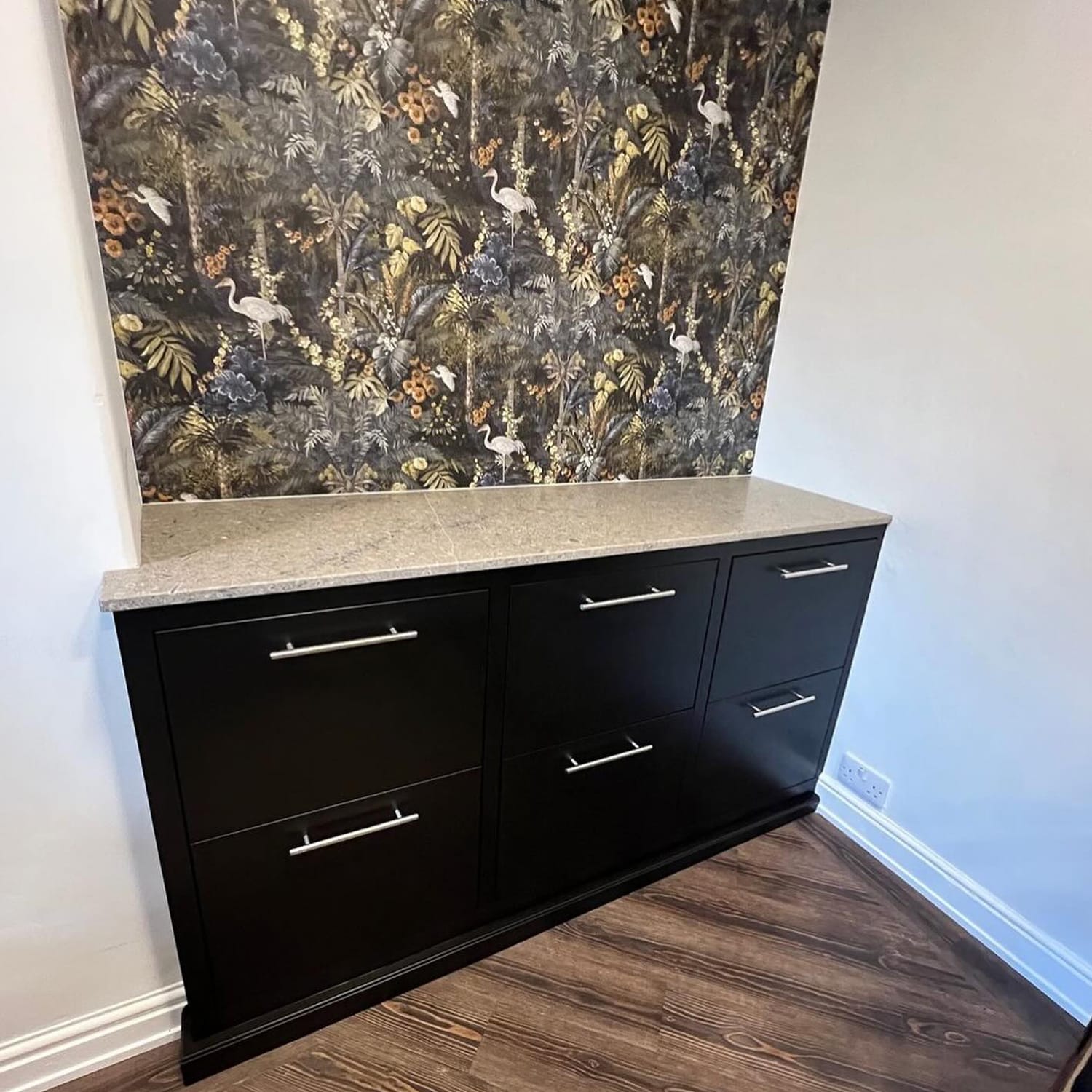
Silestone: design choice and straightforward everyday care
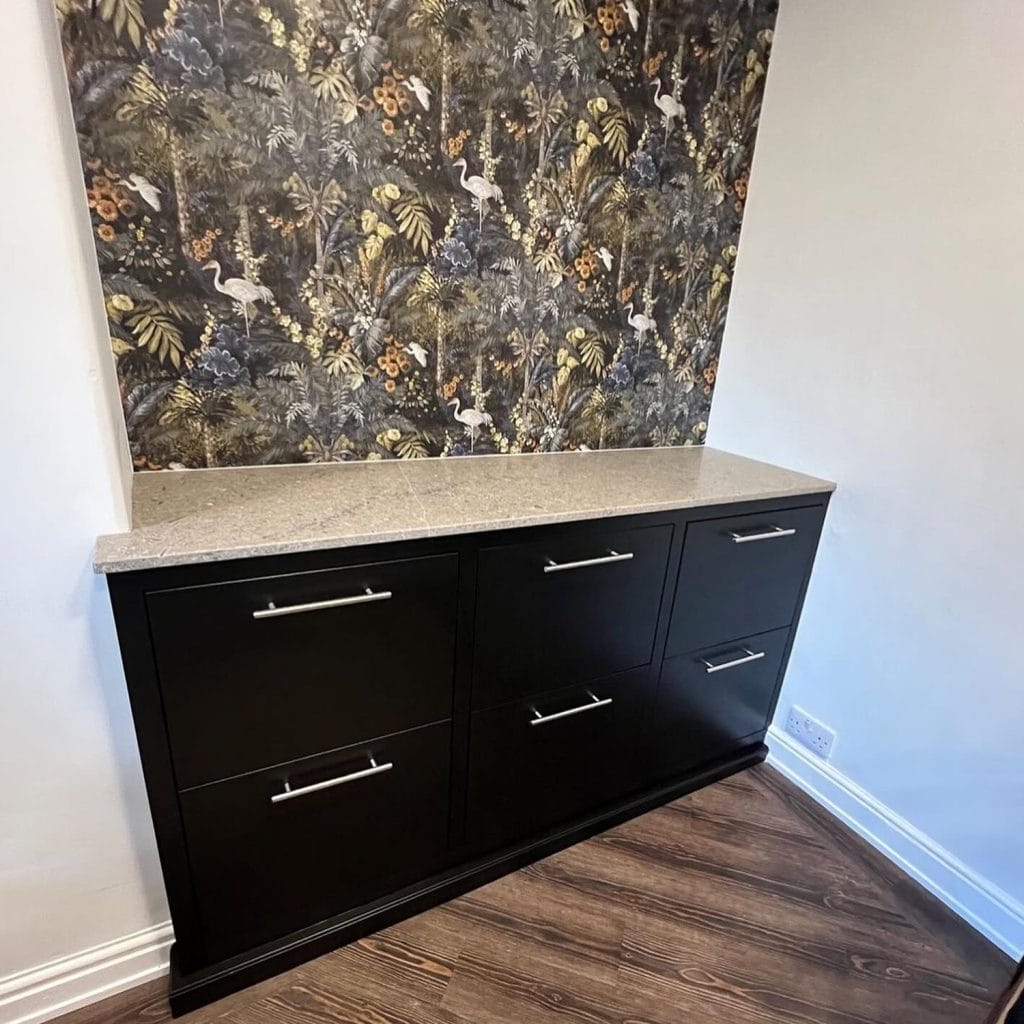
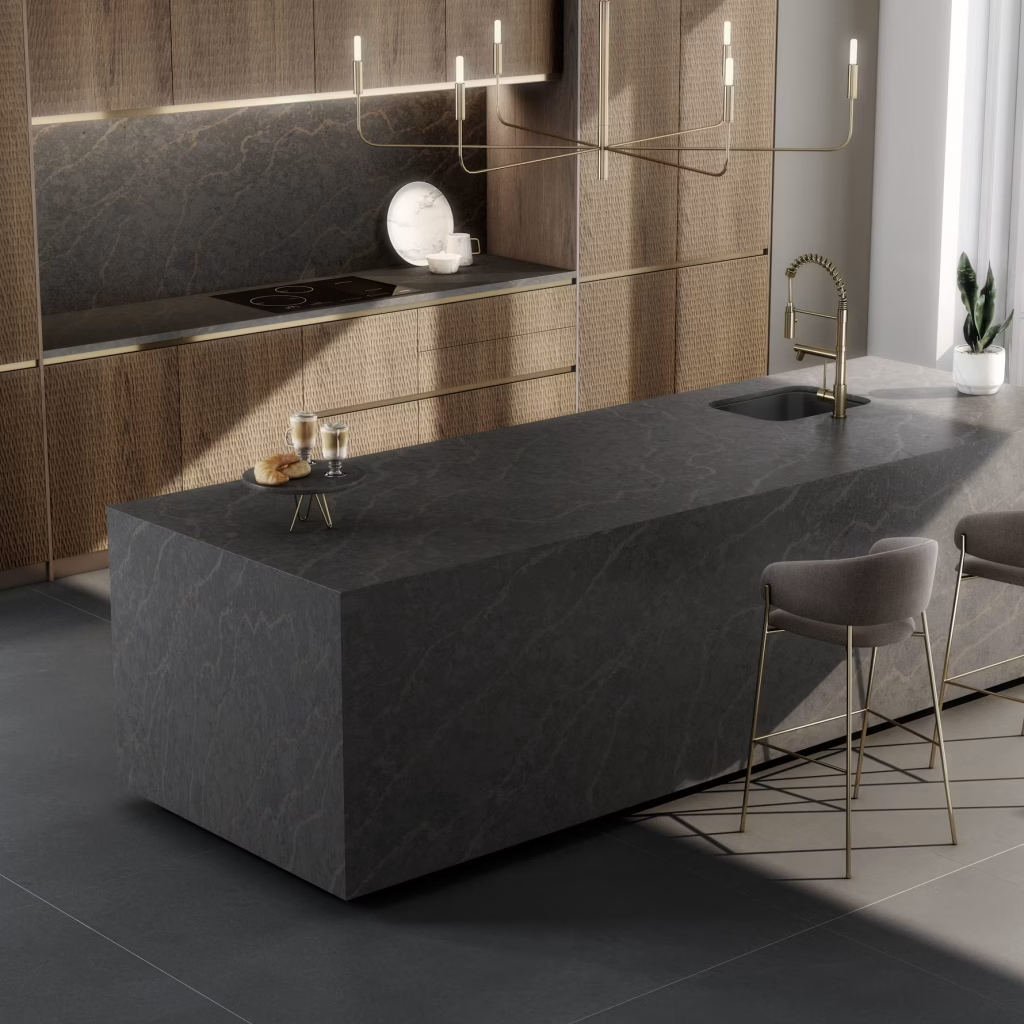
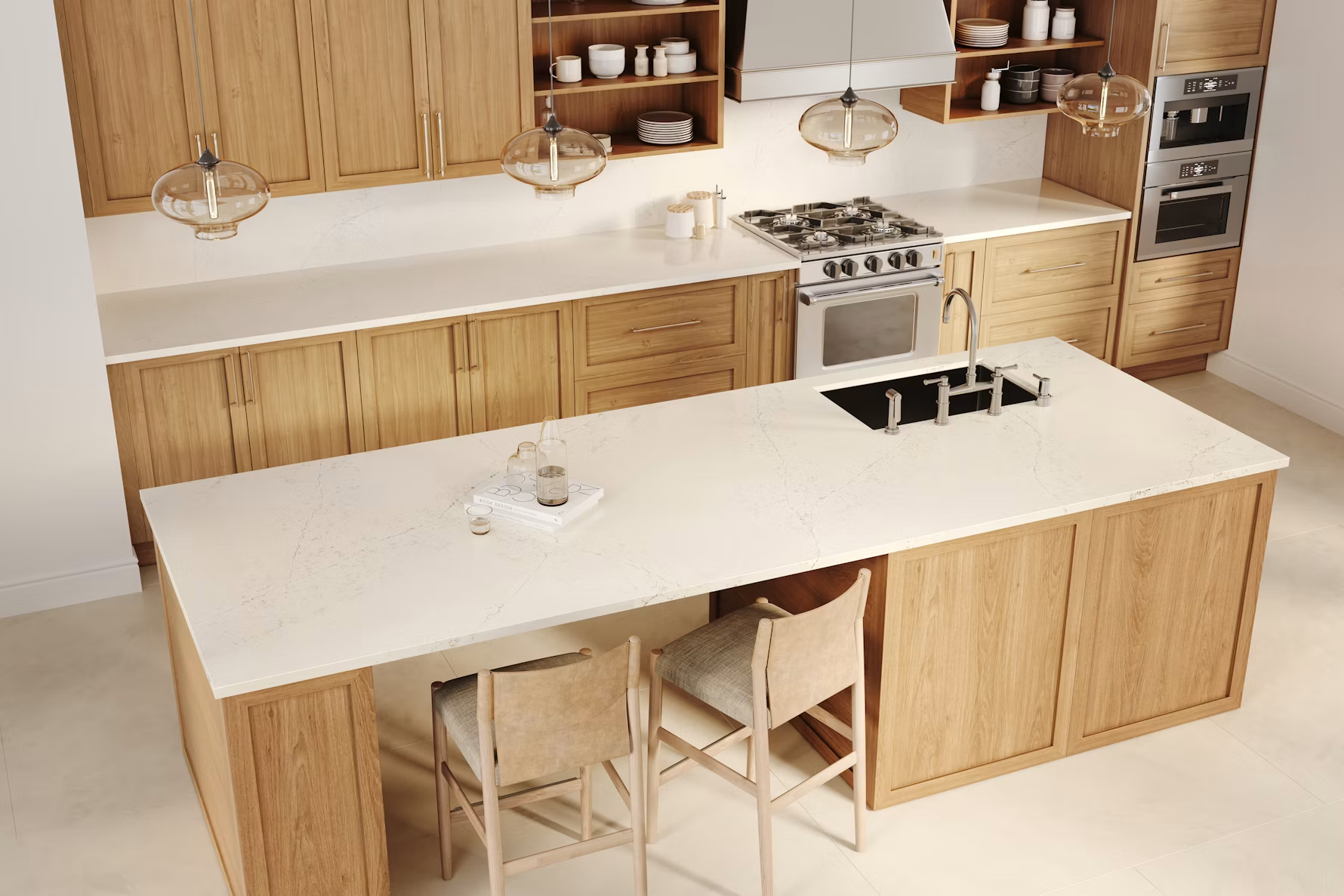
Silestone is an engineered mineral surface from Cosentino, available in a wide choice of colours and designs. Options range from understated finishes to prominent veining, making it useful when coordinating a new worktop with an existing kitchen.
Its low porosity and resistance to everyday stains make it a practical option for busy households. Hot pans should be placed on trivets, and cleaning should follow the manufacturer’s guidance.
If you like a coordinated appearance and want a surface with straightforward routine care, Silestone is worth exploring.
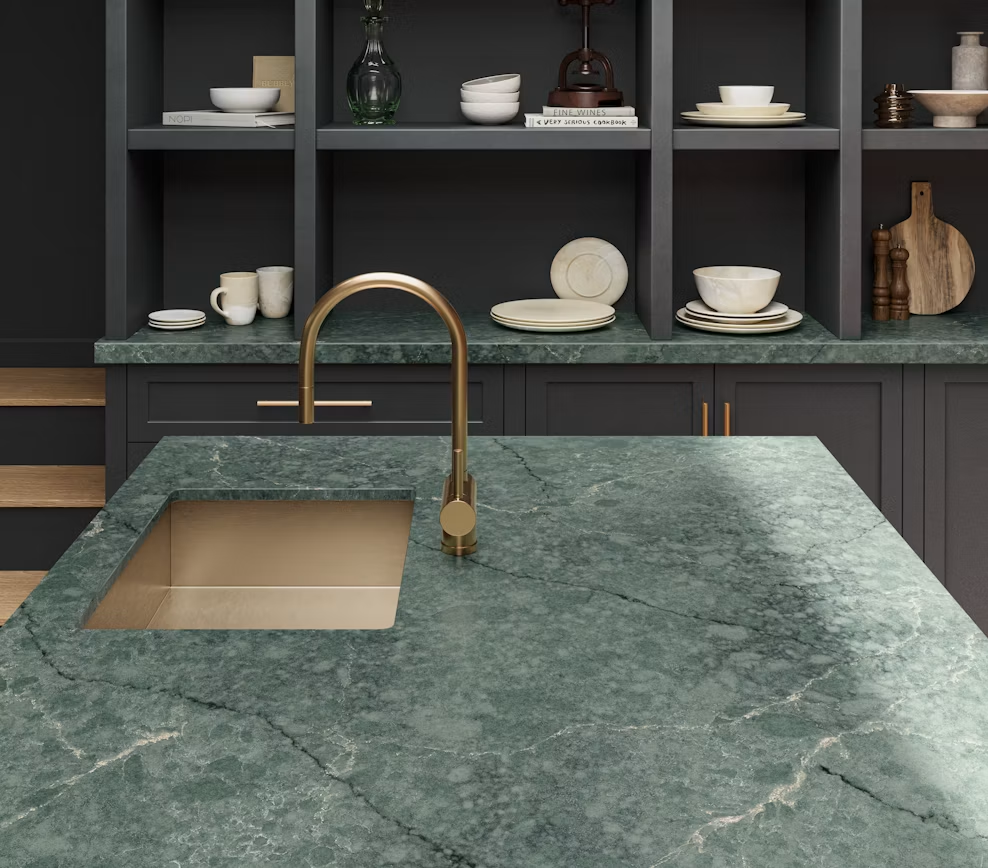
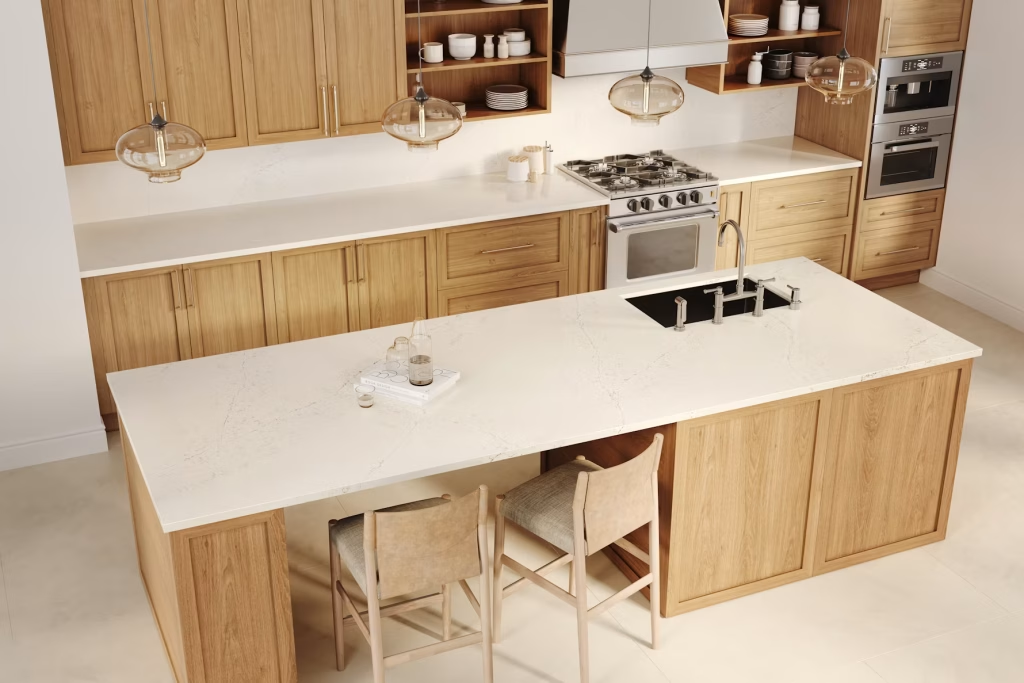
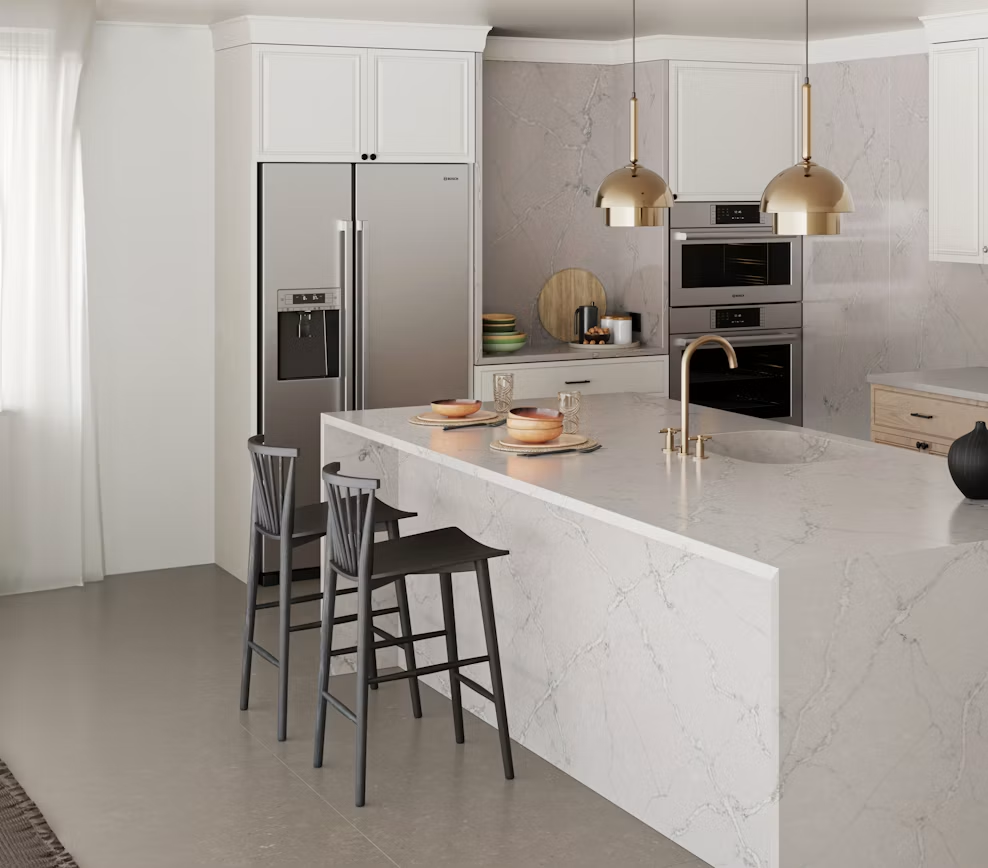


Dekton: strong performance for a hardworking kitchen
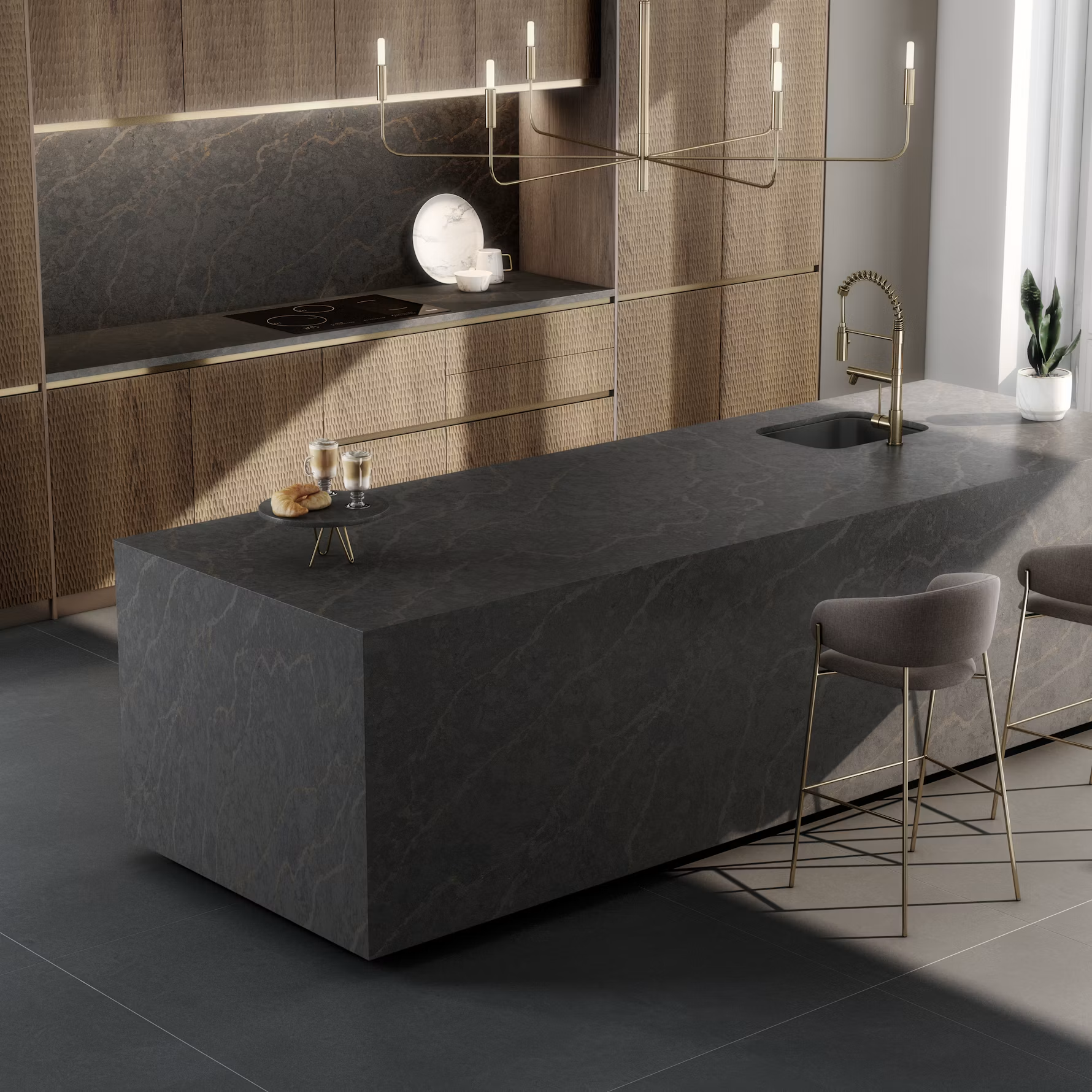
Dekton is Cosentino’s ultra-compact surface, manufactured from a blend of minerals. It offers high resistance to heat, scratches and stains, alongside a choice of stone-inspired, concrete-style and other contemporary designs.
It is worth considering if cooking plays a big part in your home and you want a surface that combines practical performance with a particular design style.
As with any worktop, correct specification and fitting matter. Edges should be protected from hard knocks, and the manufacturer’s care guidance still applies, including heat-protection advice for thinner surfaces and prolonged exposure.


How do the materials compare?
| Material | Main appeal | Everyday considerations |
| Granite | Natural patterns and individual character | Sealing needs vary; use suitable cleaners, chopping boards and trivets. |
| Mandale limestone | Derbyshire provenance and distinctive fossil detail | Requires careful cleaning; acidic spills can etch it, even when sealed. |
| Silestone | Broad design choice and low porosity | Straightforward routine care; protect against hot pans. |
| Dekton | High resistance to heat, scratches and stains | Protect exposed edges from knocks and follow care guidance for the chosen specification. |
There is no single best material for every kitchen. Bring photographs of your room and, if possible, a cupboard door or flooring sample when discussing the options with us. Seeing materials together makes it easier to judge colour, pattern and finish.
How does replacing laminate worktops with stone work?
Knowing what happens at each stage makes the project easier to plan. It also helps you coordinate the worktop installation with any preparation your kitchen needs.
1. Explore the materials and discuss your project
Visit our Rowsley showroom to see the options and talk through your ideas. Photographs, approximate measurements and an indication of your budget provide a useful starting point.
We can help you compare materials and consider details such as thickness, edge profiles, upstands and splashbacks. Your sink, taps and hob should also be chosen before templating, as these affect the finished design.
2. Arrange cabinet checks and preparation
Ask your carpenter or kitchen fitter to check that the existing units are suitable for the proposed worktop. Any repairs, reinforcement or levelling should be completed before accurate measurements are taken.
You should also agree who will handle plumbing, appliance disconnection and reconnection, and any tiling or decorating needed afterwards.
The cabinets must be secure and in their final position, ready for templating.
3. Agree removal of the old worktops
Existing worktops have generally already been removed when Natural Stone Sales arrives, but we can provide a removal service if arranged beforehand.
Discuss this with us when planning the project so the timing and scope of the work are clear. Confirm who will disconnect the sink and hob, and whether disposal of the old worktops is included in your arrangements.
It is also worth agreeing protection for floors and nearby surfaces, access through the property and responsibility for clearing waste. This helps avoid uncertainty on the day.
4. Template the kitchen accurately
Templating is the process of recording the precise dimensions and details needed to manufacture your worktops. It goes beyond measuring the length of the cupboards: wall shapes, joints, overhangs and the positions of sink and hob cut-outs all need consideration.
At Natural Stone Sales, we also look at details such as tap clearance, drainer grooves, upstands and splashbacks where required. Access is checked too, particularly for large islands or long sections of stone.
Once templating is complete, the units should not be moved or adjusted without speaking to us. Even a small change could affect how the finished worktops fit.

5. Manufacture and fit your new worktops
The templates are used to manufacture your bespoke worktops at our yard before our team delivers and fits them. Preparing the surfaces off site reduces the amount of fabrication needed in your home.
Confirm the installation schedule when arranging the work, including any period without a working sink or hob. Plumbing and appliance reconnections should be coordinated with the relevant trades.
Care requirements and any sealing depend on your chosen material. Before using your new surfaces, make sure you understand the cleaning advice and any waiting time required after installation.

Can I keep my existing sink and hob?
Often, yes, provided they are in good condition and suitable for the new worktop. Their dimensions and fitting requirements need checking before manufacture.
This is also a useful opportunity to consider whether your current sink still suits you. Perhaps you would prefer a larger bowl, a different tap or an undermounted design.
These choices affect the cut-outs and surrounding worktop detail, so they should be finalised before templating. Having the relevant items available allows their positions and clearances to be checked accurately.
Will my wall tiles and splashbacks need replacing?
Not necessarily, but the junction between the worktop and the wall needs careful consideration.
Removing an old surface can disturb tiles or expose areas previously hidden by an upstand. Choosing a different worktop thickness may also leave a gap beneath existing tiles.
We can discuss upstands and splashbacks as part of the worktop design. Identifying these details early helps you plan any additional tiling or decorating with your fitter.
Is replacing the worktops worth the cost?
It can be a worthwhile investment when you are happy with the cupboards and intend to keep the kitchen for years to come. You can focus your budget on the surfaces you see and use every day while retaining the parts that still work well.
The overall cost depends on the material, dimensions, cut-outs, edge details and fitting requirements. Cabinet preparation, removal of the old surfaces, reconnections and any repairs should also be included when considering the total budget.
If the cupboards are deteriorating or you expect to change the layout soon, planning everything together may make more sense. Bespoke worktops are made for a particular arrangement, so moving them into a future kitchen cannot be assumed.
Let’s look at what could work in your kitchen
You do not need to have every detail decided before contacting us. Photographs, approximate measurements and an idea of what you would like to change provide a useful starting point.
At Natural Stone Sales, we can guide you through the material choices and take care of templating, manufacture and fitting, with old worktop removal available by prior arrangement.
Contact our team or visit our Rowsley showroom to explore how new worktops could give your existing kitchen a fresh start.
New Kitchens
If you are planning a new kitchen rather than just replacing the worktops, bring along your ideas, plans or measurements and talk to us about creating worktops specifically for your new kitchen design.
Visit Our Derbyshire Showroom
If you’re considering new stone worktops, visit our Rowsley showroom where you can see materials and finishes for yourself and discuss your project with our team.
Natural Stone Sales Ltd
Old Station Yard
Rowsley, Matlock
Derbyshire, DE4 2EJ
Tel: 01629 735 507
Email: enquiries@naturalstonesalesltd.co.uk